Thursday, December 8, 2011

I don't know where to put this.

Delegate Foster, Indiana 1851
"Gentlemen who profess the greatest sympathy for the negro, have, in their admiration of his character, compared him and his struggles for freedom to the Hungarians and Poles, who fought against desperate odds for their political rights. But, sir, there is this great difference between the two: The Hungarians fought as a nation, and were recognized as a nation—not as isolated individuals; the case of the negroes cannot be compared to this, for they have no name or existence as a nation; even on their native continent they live in barbarian tribes of the lowest scale of sentient being; in this country, they exist only in two classes—the slave and the nominally free—and no one expects that we shall be engaged in a civil war with them. There is a vast difference, sir, between the moral spectacle of a national army, arrayed against the armies of another empire seeking to subjugate them, as was the case with Hungary, and here and there a straggling " nigger" absconding from the cotton field or kitchen of his master? [Laughter.] No, sir, there will never be a civil war between the two races in this country, unless, indeed, through the misguided sympathy of certain gentlemen, known as Abolitionists."
I am compiling a dataset on the justifications given by delegates to state constitutional conventions for exclusion or inclusion into the suffrage. This does not fit. But I intuitively feel that it is important, that it captures an undercurrent to American racism that has long been present. We live, even now, in an age of nationalism: the nation is an appropriate and legitimate actor, ideal, community. The 'race' used to be, it is no longer. I have often encountered various claims that African Americans are de-racinated; that they were stripped of any ethnic identity, and thus the potential for a national identity. This is, in one sense, the Moynihan thesis. Stripped of the capacity to be a nation, they could never achieve what the Irish achieved, the Quebecois mostly achieved, what colonized peoples the world over have achieved: national liberty and self-determination. I find this bunk, but it potentially had de-mobilizing consequences.

What the language of race offered, when embraced and developed by blacks--throughout the Americas--was a counter to the 'nation.' The death of race is to be celebrated [1]; but its contribution, when claimed, should not be forgotten.


[1] Of course, like shit, it will come again in the evening. We'll see what the substance is this time, who will be included in the demarcation. I suspect that a good place to look will be on the subway, Sunday evening, when custody-sharing parents, without a car, responsibly raising their families, make the trade and bring home their children--backpacks on--for the week. Color will be less important in this racialization--although it will likely be pretty important--than the combination of struggling to eke out a working class life when there are no more structural or institutional supports for the working class, and the opprobrium heaped upon you for having 'failed' in your 'duty' to raise a family in a two-parent home.

God what an ass

Delegate Holman, to the Indiana State Constitutional Convention in 1851. This convention, more than any of the other antebellum conventions I have read, is the supremacists' coven: male supremacy, white supremacy, Anglo-Saxon supremacy.
"It was remarked by the gentleman from Posey, that he feared women did not receive the same consideration which they would receive if they were allowed to exercise the right of suffrage; [Holman] feared that the same justice is not meted out to them, that would be if they exercised the rights of the politician. I have no doubt, sir, that in such an event, our whining politicians would be everlastingly weeping over the wrongs done to the rights of the fair voters, as they are now, upon every occasion, mourning over the wrongs which their fellow citizens are suffering, with very commendable patience however, but I doubt, sir, whether the sparkling eyes of our fair friends would grow any brighter, or that their rosy lips would wear any sweeter smiles if they were besieged by politicians asking hnmbly for their votes."
God forbid.

This is the convention where delegate Dobson would declare, rather impetuously,
"whenever you begin to talk about making negroes equal with white men, I begin to think about leaving the country."
This would be mocked throughout the country at the time, and, to my ears at least, rings in Mark Twain's portrayal of Huck's pap:
"Oh, yes, this is a wonderful govment, wonderful. Why, looky here. There was a free nigger there from Ohio -- a mulatter, most as white as a white man. He had the whitest shirt on you ever see, too, and the shiniest hat; and there ain't a man in that town that's got as fine clothes as what he had; and he had a gold watch and chain, and a silver-headed cane -- the awfulest old gray-headed nabob in the State. And what do you think? They said he was a p'fessor in a college, and could talk all kinds of languages, and knowed everything. And that ain't the wust. They said he could VOTE when he was at home. Well, that let me out. Thinks I, what is the country a-coming to? It was 'lection day, and I was just about to go and vote myself if I warn't too drunk to get there; but when they told me there was a State in this country where they'd let that nigger vote, I drawed out. I says I'll never vote agin. Them's the very words I said; they all heard me; and the country may rot for all me -- I'll never vote agin as long as I live.
Back to Indiana: the delegate was offering an amendment, to the a resolution inquiring as to whether the committee on the elective franchise would find it expedient to report back a separate provision on black suffrage that would be sent to the people for popular rejection, for such was the foregone conclusion. The amendment was that anyone who would vote at the referendum in favor of black suffrage would themselves lose the right to vote, unless the egalitarian suffragists were in the majority. Dobson continues:
"The substance of my amendment is--and I want it fairly understood --that if those who are in favor of negro suffrage are in the majority, we will leave the country;  and if we are stronger than they, let them leave and we will remain. Let every man be asked this question at the polls, and, as he shall answer, let it be known who he is. The free soil question does not come up here that is quite a different thing. But as far as the question of negro suffrage is concerned, if we are to have any more of it, I want to act upon jt in this most definite manner. I am satisfied that perhaps three fourths of the citizens of the  State would rather leave, if the negroes were to be allowed to come here and exercise the elective franchise." 
One delegate, Barry, who disclaimed and qualified and caveated, nonetheless had the courage--for it is courage, of a sort--to offer an amendment directing that the committee report back a suffrage clause allowing blacks to vote. He would not support his amendment. This, more daring stand was undertaken by  Edward Ralph May, a Democrat and a member of the state legislature. The vote was 1-122. He would die one year later, with his wife. Time to praise famous men.

Update: May only grows in esteem:
" Respecting woman, sir, it is unbecoming in me to say much. My theory, however, is this: I believe woman to be essentially the same with man. Whether we regard her moral, her physical, or her intellectual nature, we find her the same with man, yet different. And, sir, as I think, in that difference consists woman's excellency .... [U]pon the vexed question of woman's rights. My theory is simply this, I can give it in a single remark: In my treatment of women I would always act upon this general principle, to grant unto woman whatever rights and privileges she demanded at the hands of man. ... I say then , in all my legislation for women I would be guided by the one principle to grant unto her whatever, on the whole she might think necessary for her good--I do not mean what some individual one might ask, not what the young girl might heedlessly wish,  or the old woman might peevishly crave,  but what women in the aggregate, women collectively, might ask for--... And, sir, for one, I very frankly say that if after such a mutual consultation and such a deliberate consideration, women should then ask to share the rights and privileges of man, I would be the last person to withhold from them a single one. But, sir, I would also ask woman to recollect that from the exercise of man's rights and privileges would result certain duties from the performance of which she must not seek to shrink."
Now there is still plenty in here to condemn and critique, the categorization of different types of women, from the foolish to the peevish. But, as I've written before, the past can be lonely. You search in vain for someone who will not disappoint, but are left a heart with no companion, a soul without a king. So you take what you can get. Obviously, I expect May to be defending slavery an all-out assault on the rights of labor in the next few pages, but I will savor the moment while it lasts.

Saturday, December 3, 2011

What I mean...

My dissertation (punchline) argues that the politics of suffrage and other rights of citizenship occur within a political order premised upon commitments--both ideas and institutions--of belonging. That is, ideas of who are the people are not only the object of contestation, but they also establish the parameters within which politics at a given place and a given time occur.

This is not a very radical claim, but it is often treated as inconsequential: structural shifts, party competition, threat of popular unrest, etc., are presented  as the crucial processes through which the suffrage is extended. Ideas about democracy are treated as almost wholly irrelevant, and ideas about belonging are seen as epiphenomenal: once the struggle for inclusion is accomplished, the ideas about who is and is not a citizen will change to reflect the new arrangements. So, the idea that African Americans are full members of the American polity comes subsequent to the achievement of full membership in the polity, or, if it comes prior, it is not so important as the actual political pressure brought to bear by the civil rights movement.

I do not claim that these political processes are irrelevant, nor even that the literature is mistaken in giving them primary emphasis. Rather, I claim that the processes most scholarship highlights are occurring within a given political order, and that this order--in which ideas of belonging are central--alters the incentives and opportunities for political agents in such a way that makes inclusion more or less difficult. It was easier to include the white working classes, because the political order established by the Jeffersonians was one that had an ideational commitment to the idea that the laboring classes were not just fully part of the community, but were possibly its most virtuous and republican part. It was more difficult for anti-slavery, abolitionists, and black activists to secure the right to vote to blacks because of these same ideational commitments, which premised membership in the community not on class, as had been the case prior, but on race. The same political processes were at work for both categories, but there was greater chance of success for one than the other. More interestingly, sometimes the same political processes would lead to opposite outcomes, precisely because of how the ordering of citizenship and belonging structured these processes.

There is often an implicit belief that the working and laboring classes, while alternately seen as dangerous, lacking in awareness, thriftless, dependent, etc., were at the very least seen as part of the community. That is, we assume, looking back, that there was a vertical integration of the imagined communities of the early republic: there were upper and lower classes, but they believed they were of the same people, of the same community. Stressing that this was in fact not always the case, and that it was the case--and that it being the case matters for subsequent politics of rights--primarily because of the particular exigencies of Revolution and the establishment of a new political order, is one of the central points of my dissertation.

So, from another place and time, I bring two quotes, which I think illustrate something of what I mean when I say no, the laboring classes and the farmers were not always seen as part of the community.

Bagehot:
Pubic opinion is the test of [a] polity; the best opinion which, with its existing habits of deference, the nation will accept: if the free government goes by that opinion, it is a good government of its species; if it contravenes that opinion, it is a bad one. Tried by this rule, the House of Commons does its appointing business well.  it chooses rulers as we wish rulers to be chosen.  If it did not, in a speaking and writing age we should soon know.  I have heard a great Liberal statesman say: "The time will come when we must advertise for a grievance."...The working classes contribute almost nothing to our corporate public opinion, and therefore, the fact of their want of influence in Parliament does not impair the coincidence of Parliament with public opinion.  They are left out  in the representation, and also in the thing represented.
Burke:
I have often endeavored to compute and to class those who, in any political view, are to be called the people.... In England and Scotland, I compute that those of adult age, not declining in life, of tolerable leisure for such discussions, and of some means of information more or less and who are above menial dependence, (or what virtually is such) may amount to about four hundred thousand. There is such a thing as a natural representative of the people. This body is that representative; and on this body more than on the legal constituent, the artificial representative depends. This is the British publick and it is a publick very numerous. The rest, when feeble, are the objects of protection; when strong, the means of force. They who affect to consider that part of us in any other light, insult while they cajole us; they do not want us for counseilors in deliberation, but to list us as soldiers for battle.
Of these four hundred thousand political citizens, I look upon one fifth, or about eighty thousand, to be pure Jacobins, utterly incapable of amendment, objects of eternal vigilance, and, when they break out, of legal constraint. On these, no reason, no argument, no example, no venerable authority, can have the slightest influence. They desire a change; and they will have it, if they can. If they cannot have it by English cabal, they will have it by the cabal of France, into which already they are virtually incorporated.
 These are English quotes, but what is striking to me is how closely they match the pre-Revolutionary, and especially the pre-Jeffersonian language of America. Statements such as this do live on in America in the antebellum period, but never so brashly, always couched, and almost always on the losing end. This does not necessarily mean they are no longer believed or maintained, but that the new political order makes their defense intolerable.

p.s. Nationalism is relevant here. The language of a distinction between the people--as a political community--gives way over the 19th century to that of the people--as a nation, encompassing all who share blood, culture, or some other such element constitutive of belonging.

Bah humbug

I hate Christmas. Have for years. See nothing in it but mandated joy, the time of the year when the full weight and firepower of the industrial-entertainment complex (and, let's face it, the gubmint) is lined up on the side of the awful people and their insistence on uniform pleasantness and shallow joy.

I was in the laundromat the other day, and Anne Murray was playing. Anne fucking Murray. I'm not even in Canada, let alone in 1988. I was on hold with the bank--yuletide joy--and they were playing a sultry jazz version of Winter Wonderland. Slowing the song down doesn't make it better, just longer.

It's not that I hate joy, pleasantness, or good tidings. Rather, I suffer a visceral rejection of insistence. Christ, what's wrong with subtlety?

Which brings me to my point. I spent the last few weeks in France and England. And lord knows the English should be truly insufferable over Christmas: few people take more satisfaction in conformity and enforced communion in pleasantness (through provincial gossip and badgering where available, through the State's 'soft hand' where needed). True fact: the song The World Turned Upside Down, apparently played when the British surrendered at Yorktown, was written about the suppression of good ole English Christmas traditions by Cromwell. Possibly the Lord Protector's only redeeming act.

And Paris is the capital of the haute bourgeoisie and their particularly centralized consumption: Galeries Lafayette, Le Bon Marché, and the trashier BHV.[1] France is the we-don't-care-about-christ-just-consumption Christian nation par excellence. Surely they must make Christmas unbearable, right?

Wrong! In both, it was much more enjoyable. Still about consuming, which isn't really the problem for me. But, oddly, less insistent. Subtler. You can be in their world, not of their world, and they won't try to force a change. Maybe I'm just not as used to their Christmas songs, so they don't grate. But I think it went deeper.

Christmas in America has to mean something. It has to bring the family together. Has to make us all feel in harmony. Or something. There is a desperation about it. In England and France, they didn't seem to care that it mean anything, and it meant more as a result.[2]

Blah.... Here is a song appropriately forlorn for the season.

Also, same, but different:


[1] trashier? This year the theme was Noël Québecois.
[2] Counter: England is the land that brought us Do they know it's Christmas, amongst the most offensive and condescending songs ever recorded.

Monday, November 28, 2011

No idea...

The one on the far left is clear ('natch), the two on the right are pretty intuitive, but what the hell is the second from the left (the centre left if you will)?

People in conversation? Seems rude to the vision and mobility impaired, at least.

People making out? Also seems rude, and carries the stereotype of Paris being made for love to an absurd length.

Racial passing?

And yes, I am sitting in the reserved space despite not being at least 3 of the 4. This is where the outlets are. I will move if at any point there are more than 5 other people in the entire terminal.

Friday, November 11, 2011

Yesterday's news...

.... November 10, 1975. The pride of the American side.


Tuesday, November 8, 2011

Interfluidity: the negative unnatural rate of interest

From Interfludity:

David Andolfatto points out that US five-year real interest rates are now negative.....

When we observe negative real rates, they are often attributed to something abnormal. Perhaps it is “depression economics” which has driven interest rates underground....
I think this aberrationist view is quite wrong. I don’t think you can make sense of the last decade without understanding that the so-called real interest rate has been trying to fall through zero for years. Only tireless innovation by the men and women of Wall Street prevented negative rates long before the traumas of 2008. A deep cause of the financial crisis was a simple expectation: That lenders ought to earn a “decent” real, risk-free yield even while a variety of trends — skyrocketing incomes for the 0.1%, the professionalization of investing, leverage-induced risk aversion, China — were creating Ben Bernanke’s famous savings glut. The market response to a global savings glut ought to have been sharply negative real interest rates for low risk savers. But as a society, we resent and resist that capitalist outcome. It is well and good for markets to drive the price of undifferentiated labor asymptotically towards zero. But God forbid that “savers” not be paid for supplying a factor that turns out not to be scarce. Instead, an alphabet soup of financial innovations was conjured to transform bad lending into demand for low risk money, and thereby support its price.... There is no such thing as a “natural” anything in economics. Economic behavior is human artifact and artifice. When economists call anything “natural” — the natural rate of interest, or of unemployment — you should recall Joan Robinson’s famous quip:
The purpose of studying economics is not to acquire a set of ready-made answers to economic questions, but to learn how to avoid being deceived by economists.
... What was the “natural” real rate of interest in 2006? According to TIPS yields, 5-year real interest rates were about 2.5%. But those rates were observed under the institutional context of a structured finance boom which transformed a lot of loose lending into allegedly risk-free lending demand. Was that rate “artificial” then? Today those same rates are -1%. Is this “natural”?
Ultimately, the words are meaningless. The level of interest rates that prevails in the market will be the result of a mix of institutional choices and economic circumstances. For now, we are in a bit of a pickle, because if we are “conservative” — if we stick with familiar institutional arrangements — we end up with outcomes that are violently disagreeable to our cultural prejudices. In social terms, a negative real rate of interest means that prudence is a cost, not a virtue. Caution is a greater vice than spending what you have and hoping for the best. Savers must be punished for their thrift.
... Current spenders assume risks of future deprivation that current savers are unwilling to accept. Why shouldn’t spenders be paid to bear that burden? Transforming present resources into future wealth is uncertain and difficult work. Savers’ expectation of a positive real interest rate amounts to a demand for time travel cheaper-than-free. Why should such unreason be accommodated? The sense of entitlement carried by savers in our society would put any welfare queen to shame.
So, are negative real rates the way to go? Should we just tell savers exactly what we tell laborers? The price of the factor you supply has fallen. This is capitalism, quit whining and deal with it!
Maybe. But maybe not. In theory, a sufficiently negative rate of interest could restore a full employment, noninflationary equilibrium....
But it might not work out so well. Debt is a particular and problematic institution. If savers must pay borrowers for the privilege of carrying forward wealth, it matters in the real world whom they pay and how well those people do their jobs. Borrowers can always default, even after they have contracted loans at negative interest rates. If we try to restrict lending to only very creditworthy borrowers, we’ll find that real interest rates have to fall sharply negative to induce spending by people who would otherwise be inclined to save. If we allow more liberal credit standards, we’ll observe higher notional interest rates, but only as prelude to widespread defaults. We’ve seen that movie and it isn’t entertaining.
The post is worth reading in its entirety. Waldman goes on to suggest that "observed interest rates are a function of distributions and institutions as well as technology," and to sketch out a model in which the distribution of resources can push the real interest negative. He suggests that this is one possibility for what he believes is the long term effort of the interest rate to go negative: "in a sufficiently unequal society, the marginal saver may have vastly more wealth than is necessary to endow her own future consumption (including proximate bequests)."

Sunday, October 30, 2011

Social Equality

Social intercourse and the suffrage.
"They suggest that we may confer political equality on the coloured people, without admitting them to social equality…. Now, sir, I submit to the gentlemen, whether these political rights, of which we are speaking, do not depend, for their preservation and right exercise, on social intercourse and equality. Not that every man, must associate with every man in the community, but I hold there must be that free and unrestrained interchange of sentiments on public questions, which can only attend a state of general equality, if we would properly prepare the mass of men to exercise political suffrage.... These separate circles or little societies which wealth or adventitious circumstances, and not our political institutions, have made distinct, have connecting links that extend the opinions thus formed by the contact of minds, from and to the extremities of the body politic, and keep up a sympathy between the whole and all its parts; and here is the foundation of the system of universal suffrage. For suffrage is only the expression of the opinions which are perpetually maturing under the influence of social intercourse and equality."--Woodward, delegate to the Pennsylvania constitutional convention, 1838.
I have argued, and continue to, that at least some of the resonance of 'social equality' in the post-bellum period as an obstacle to state intervention in civil rights came about because of it was strategically deployed by racial egalitarians who were attempting to secure rights of political and civil equality (for principled reasons, as well as the huge labor interest once slavery was abolished in ensuring that free blacks would not remain a helot class) against understandings of citizenship and belonging that remained anchored in the white male republic.

The counter, however, is that the opponents of black suffrage and civil rights in the antebellum period had their own sophisticated understanding of the importance of social equality: only under conditions of social equality and intercourse could there be the formation of sympathy with the whole, that the opinions exchanged, developed, and defended in these networks of equal intercourse incrementally structured a broad attachment of these "separate circles or little societies" with a community in formation. Absent this sympathy, it was class warfare, and universal suffrage would be simply a weapon in the hands of the property-less. And absent this sympathy, foreclosed by the lack of social intercourse on a plane of equality, the extension of the suffrage to blacks would have been creating a scenario in which electoral competition became an arena for race war.

Clearly the resonance of concerns over social equality come in part from the fact that both the advocates and opponents of black civil and political rights embraced this discourse, just as it is clearly the case that they embraced it because of its broader resonance. But by looking at the discourse from the perspective of the strategic calculus of racial egalitarians, we miss the nuanced concerns of antebellum white supremacists. And we should listen to these dead activists, however distasteful, because the specific content of these concerns--that suffrage and representative government requires a sympathy for the community, a belief in a common weal, and that these are rooted in patterns of social intercourse that are highly resilient in the face of state intervention--is one  that we need to take very seriously.

Thursday, October 27, 2011

Let us now praise forgotten men

I wrote something a few days ago about the inability to find heroes in history. I don't want to suggest that I am looking for these, but when hanging out in their world there is an urge to find sympathetic persons to cheer on. 


Given my focus on suffrage, one obvious metric is whether someone supported the extension of the right to vote to all classes and races. Most come up short, with the class conservatives most likely to be taking the egalitarian position on race and vice versa. So those who defy this pattern, and defend an unambiguously egalitarian agenda, are worthy of note.


In the Pennsylvania constitutional convention of 1837-38, there were only between 5-8 members who supported both.[1] 


Earle, of Philadelphia
Clarke, of Indiana County
Dickey, of Beaver County
Farrelly, of Crawford County
Cleavinger, of Greene County
Hayhurts, of Columbia County
Purviance, of Butler County
and White, of Tioga County.


Even the beloved Thad. Stevens [2] would vote against removing the taxpayer qualification. All but Dickey and Purviance (who were Anti-Masons) were Democrats, which was the party most vigorously opposed to black suffrage, so their courage on this issue is even more notable. 


Earle is especially notable. He was a Democrat, the publisher of the Mechanics' Free Press and Reform Advocate, and would go on to be the Liberty Party's vice-presidential candidate in 1840, after losing favor with the Democrats for his stand on black suffrage. So, here's to Earle. The origins of the alliance between labor and the civil rights movement are further back in history than we usually believe, and Earle was one of the points of contact during the antebellum period.


[1] There were two votes on whether the suffrage should not differentiate between blacks and white: on the first, 8 voted against differentiation who also voted for the removal of the tax qualification, while only 5 did so on the second. 
[2] I love Thaddeus Stevens. And so should you. Not only was he a near constant vanguard advocate of far-reaching racial equality, he was accordingly "slandered" as Austin Stoneman, the Radical Republican leader (with a mulatto consort) in Birth of a Nation. His biographer describes him as "The Great Commoner, savior of free public education in Pennsylvania, national Republican leader in the struggles against slavery in the United States and intrepid mainstay of the attempt to secure racial justice for the freedmen during Reconstruction, the only member of the House of Representatives ever to have been known, as the 'dictator' of Congress." (Trefousse, Hans L. Thaddeus Stevens: Nineteenth-Century Egalitarian (1997) , p.xi). Personally, my favorite slander of Stevens came during his early career, as an Anti-Masonic delegate to the state constitutional convention of 1837-38: "the great unhinged of Adams county."

Monday, October 24, 2011

Cale and Warnes....

Empty bottles.

I've had a soft spot for Warnes entirely as a result of Famous Blue Raincoat. Knowing that she does Cale as well as Cohen carries her even further along in my esteem.


Paris, 1939

Enchanting? Yes..., but:

The woman who owned the flat had left for the south of France before the Second World War and never returned. But when she died recently aged 91, experts were tasked with drawing up an inventory of her possessions and homed in on the flat near the Trinité church in Paris between the Pigalle red light district and Opera.
For 70 years the apartment had been left untouched, the rent dutifully paid. How does one continue to pay the rent for a place to which they must certainly know they will never return? Estate manager, presumably, responsible for their investments and diligently paying the bills as they arrive?

They dance to the beat of a different drum.[1]

What I found most interesting was not the million dollar Boldini, but rather the scene itself: walking into 1930s upper class Paris, the Mickey Mouse, the stuffed Ostrich, the smell of decay.

[1] They don't march. For that matter, do they dance to a drum's beat at all?

Friday, October 21, 2011

The only time I'll ever link to Bobby Jindal's webpage

Delegate Grymes, Louisiana State Constitutional Convention 1845:
"we may have an irruption of the inhabitants of Central Asia, of Affghanistan, and of the Hindoos; and if they cut down and fell our forests, without attempting to regulate our institutions, we will be fortunate indeed" (p.69)
Grymes is arguing against residence requirements for naturalized citizens before they can be eligible to be elected to public office. So, I link to Bobby Jindal, his official state site and his Wikipedia page. I disagree with Jindal on a range of issues (somewhere between 'every damn thing' and 'good lord, what is this man's problem'), but his election shuts up Grymes. (Yes, I know that death did that a long time ago, but this is the problem with living in the history.) Jindal was raised Hindu, converted to Catholicism, and is the first Indian-American governor in the United States. And it brings me a totally un-warranted pleasure to think that Voorhies would be aghast.

Reading the constitutional convention debates is fascinating; but with history being another country and all that jazz, I find it hard to be a partisan. That is, while it is very easy to find yourself repulsed by certain delegates (such as Grymes), and there is a definite attraction to other delegates, it is difficult to maintain these feelings across issue areas. This is largely because the ones defending (or even advancing) black suffrage are often the ones trying to impose restrictions on foreigners, or on poor whites. The lines of belonging parameterize the commitment to principle. There are some exceptions: Wisconsin in 1846 seems to be remarkable in that the people trying to expand the suffrage to blacks also want immigrant voting and are at the very least not rolling back white voting and are often loudly defending the unqualified right of the governed to vote, with at least some suggestions that this might include women. But generally, and to me surprisingly, finding heroes in the past is at least as difficult as finding them in the present--although villains abound in both.

Sunday, October 16, 2011

Odious distinctions, solidarity forever

I suspect that the old language of the Democratic Party, the party of Jefferson and Jackson, the language of equal rights, against odious distinctions, still resonates:
"It taxes one class for the support of another, and what is worse, taxes the poor for the sake of the rich. It thus produces that inequality, which is the bane of republics; for it is in fact the influence of the few, or, in other worse, aristocracy. Now, though no just government will interfere, by sumptuary laws, to restrain the acquisition of wealth, and thereby prevent inequality, so neither will any just government, by fostering particular interests, at the expense of others, promote inequality. This is the opposite, and the worst extreme of sumptuary laws. Nor is the inequality which is produced by the interference of the law, by any means as harmless as that which results from different dispositions, and different capacities in human beings. Whilst the one may act as a salutary stimulus to industry, and its worst consequences are continually neutralized by the alienation and division of property, the other, by creating distrust in the government, produces despair, and depresses industry; and the dread of retributive justice, which always accompanies wealth unjustly acquired, so far from giving rise to division of property, inevitably leads to concentration and primogeniture,--to legal safeguards, corporations, charters, monopolies, and privileged orders." -- Report of the Committee on Agriculture, on the memorial of the Delegates of the United Agricultural Societies of sundry counties in the state of Virginia, February 2, 1821, p.55-56. 
The first bolded passage is the old mantra of the Democracy, the one that tied the working class to the southern planter. This resonates still, but its target is the poor. The idea that public policy is structured to tax the poor and distribute to the rich, while making occasional appearances, remains largely unformulated at the level of popular discourse these days.

I think that in the second bolded passage we find the central disconnect between those who believe the massive increase in inequality in recent decades is a problem, and those who believe that is a reflection of talent, however obtained, hard work, and luck. The passage suggests that inequality is not in itself problematic, but rather that it is inequality ill-gotten, achieved as a result of courtier leverage.

This brings to mind Elizabeth Warren's claim that "no on in this country got rich on their own." Warren's claim is about a broader understanding of the communal basis for individual success, and for a broader understanding of success. But much of what is animating popular support for Occupy Wall Street seems to be somewhat more narrow, and at the same time, something more politically tractable: that a sliver of people in this country got rich by taking, by having given to them, by appropriating from the damned rest of us, and that this appropriation was enabled and in some cases directly and deliberately accomplished by government action. And that, empowered by the state through the discriminatory policies of the conservative nanny state-- through the distribution of tax policy, trade policy, our largely hidden and poorly coordinated industrial policy--a privileged class has been erected, one that will be able to use its power to further entrench itself, to  wrap the commonwealth more tightly in its web.

I prefer the broadness of Warren's critique, its unwavering answer to the apologists of inequality who eulogize hard work, talent, brilliance. But I prefer the cut, the anger, the barely contained hatred of the latter. Inequality is not a very good motivator for political action. Theft from the public good, profiteering at the expense of the community, and odious distinctions between classes, especially those that distribute from the poor to pay for the luxury of the rich, have been wonderful motivators throughout American history, and I suspect they remain today.

So, raise the banner high and repeat the old mantra: They have taken untold millions that they never toiled to earn....

Sunday, October 9, 2011

Science fiction in Virginia...

.... or, an early chapter in the rise of Skynet.

From the Virginia State Constitutional Convention of 1829-1830:
"But I am told that Universal Suffrage, (I am no advocate for Universal Suffrage,) or more correctly General Suffrage, was the invention of the age of the Lord Protector Cromwell--that it sprung up for the first time, during the Commonwealth of England. It is called novel doctrine. Were it so, that would not prove it false. Steamboats are a novel invention, and many other useful arts are comparative novelties. The new race of men which modern science has created and made, is a new invention. I mean the wooden, brazen and iron men, which neither eat, drink, sleep, nor get tired; which are adults without being infants, full grown men as soon as born. These new men, these novelties, are likely to be a very useful race; for when inspired by steam, they are as rational as our black population. England has two hundred millions of them, and these United States have more than ten million of them. They are all revolutionists and will as certainly revolutionize the world as ever did the art of printing, or any conquering invader." --Delegate Campbell, p.388 
"Inspired by steam." The fantastic conquerings of human ingenuity, and of course, the so-deeply ingrained that it is almost background white supremacy.

Saturday, October 8, 2011

Homeward bound....

... one night on the deep.

I seem to only ever post about music and movies these days. The original goal of the blog was to provide an outlet for dissertation research. More of that later.

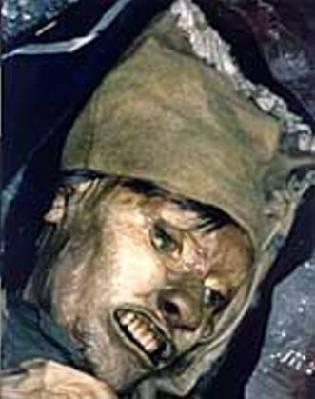
But for now I want to think of Lord Franklin.


The grotesque images delighted me as a child. The knowledge that my suspicions were right, that despite the implicit assurances otherwise, the damned cold could kill you, and worse, could preserve your body as a horrifying reminder of your miserable demise, has led to a preference for fire over ice, a preference that has no real rational basis but that I won't dismiss as mere sentiment. From what I've tasted of desire..., and all that. (Also, this. Or, the opening sentence from this. My childhood had a theme.)

And then there was this:


As I understand it, this was the version of the song that inspired "Bob Dylan's Dream." I prefer this. When I first heard it I believed it to be sung by an old man. I also preferred that. But I'm okay with any song from a second album entitled "Second Album." Gets to the point. 

Update: Comment: "For Dylan to have been inspired by Martin Carthy’s version (which appeared on Carthy’s Second Album – I also like the title – in 1966),  he would have had to have heard it Live by 1963 at the latest as that’s when “Bob Dylan’s Dream” appeared on The Freewheelin’ Bob Dylan). This is very possible. All Music guide lists many versions, mostly British and Irish." Yes. But Carthy was playing this prior to 1966, and it seems likely that Dylan learned the song from Carthy when they met in London in December 1962. Or, from Paul Clayton, who had recorded the song for his 1957 album Whaling and Sailing Songs: From the Days of Moby Dick. This is all from Wikipedia though, so hardly definitive.